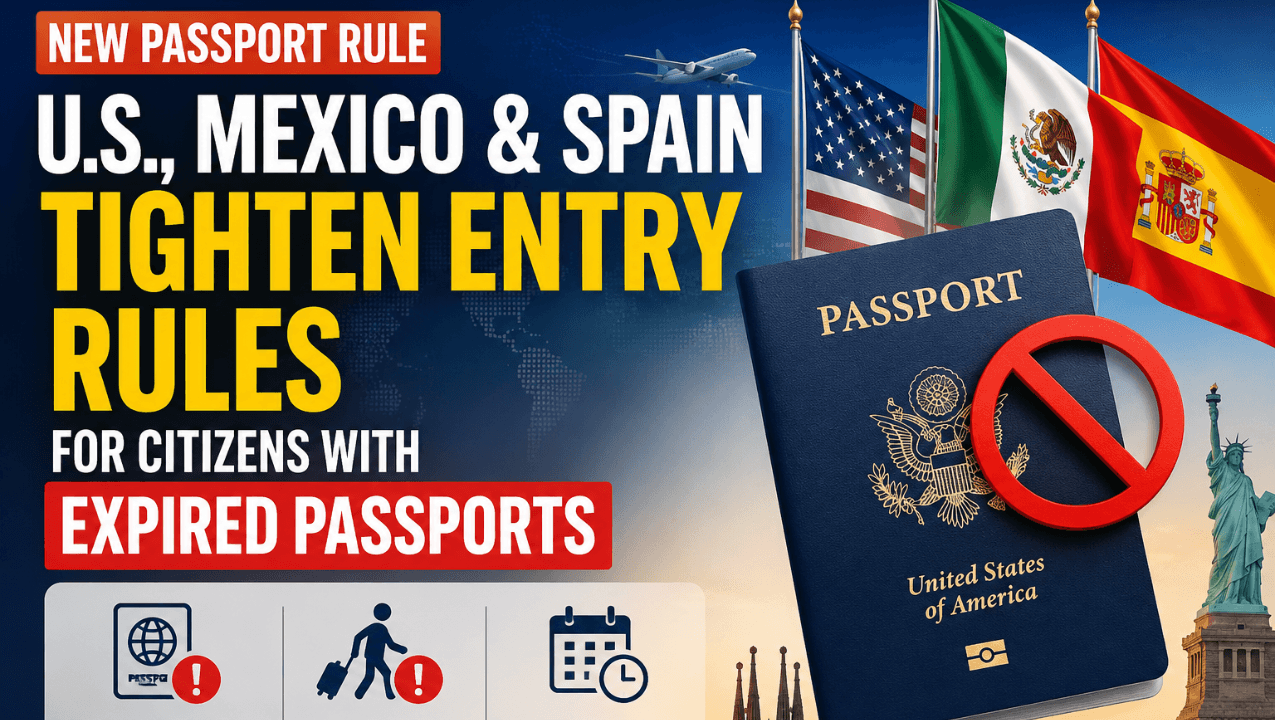
Despite how the headlines read, the United States, Mexico, and Spain haven’t introduced a brand-new passport law overnight. What’s changed is enforcement: all three countries are reminding travelers, more visibly than before, that long-standing passport validity rules will be checked more strictly, both by immigration officers and by airlines before you even board. The core message is simple — an expired, damaged, or insufficiently valid passport can now get you denied boarding at check-in, long before you ever reach a border agent.
The United States: The Six-Month Rule
The U.S. generally expects a passport to remain valid for six months beyond your intended stay, though this depends on your nationality. Travelers from countries in the so-called “Six-Month Club” — a reciprocal arrangement between the U.S. and many other nations — only need their passport to cover the length of their actual visit, not six extra months. Just as important, any visa or ESTA approval linked to your passport must match your current, valid document. If you renew your passport, your existing ESTA or visa may need to be updated too, since a mismatch can delay or block boarding even if your immigration approval is technically still valid.
Mexico: Simpler on Paper, Stricter in Practice
Mexican immigration law itself only requires a valid passport at the point of entry — there’s no official six-month rule. In practice, though, many international airlines apply their own stricter standard, recommending at least six months of remaining validity regardless of what Mexican authorities technically require. This matters most for travelers on multi-country itineraries through North America or Latin America, where the safest approach is to plan around the strictest requirement on your route, not just Mexico’s minimum.
Spain and the Schengen Standard
Spain’s rules follow the wider Schengen Area framework rather than standing alone. To enter, your passport needs to remain valid for at least three months beyond your planned departure from the Schengen zone, and it must have been issued within the last ten years — even if it shows a later expiry date. This second point catches out some travelers, particularly those with older UK passports that had extra months added onto their validity before October 2018; those extra months don’t count for Schengen purposes. Since a valid Spain entry effectively grants access to most of the Schengen Area, this requirement carries extra weight for anyone planning a multi-country European trip.
The New Border Technology Behind the Push
These stricter checks are landing alongside real technical upgrades at the border. Spain, along with the rest of the Schengen Area, launched the EU’s Entry/Exit System (EES) on April 9, 2026, which requires biometric registration for non-EU travelers at the border — meaning your passport now needs at least one blank page for entry and exit records. Later in 2026, the EU also plans to roll out ETIAS, a pre-travel electronic authorization for visa-exempt visitors, similar in spirit to the U.S. ESTA system. None of this replaces passport validity rules — it adds another layer of document and identity checks on top of them.
Why Airlines Are the New First Line of Defense
Increasingly, it’s not immigration officers catching passport problems first — it’s airline staff. Airlines are legally responsible for verifying that passengers meet a destination’s entry requirements, and carriers face fines and logistical costs if they transport someone who gets turned away. As a result, many airlines now cross-check passenger documents against immigration databases at online check-in, at the airport counter, and again at the boarding gate. This means a passport issue that once might have surfaced at immigration can now get you stopped well before you reach the plane.
Passport Validity at a Glance
| Destination | Minimum Passport Validity | Additional Notes |
|---|---|---|
| United States | 6 months beyond stay (unless Six-Month Club country) | Visa/ESTA must match current passport |
| Mexico | Valid passport required on arrival | Airlines often recommend 6 months’ validity |
| Spain (Schengen) | 3 months beyond Schengen departure | Must be issued within the last 10 years; 1+ blank page required |
Source
Frequently Asked Questions
Do I really need six months of validity to enter Mexico?
Not officially — Mexican law only requires a valid passport. But many airlines apply a stricter six-month standard on their own, so it’s safest to plan around that.
What is the Six-Month Club, and how do I know if I’m in it?
It’s a reciprocal agreement between the U.S. and certain countries where passport holders only need validity covering their actual stay, not six extra months. Check with the U.S. Department of State or your home country’s foreign affairs department to confirm your status.
Why does my Spain-bound passport need blank pages now?
The EU’s new Entry/Exit System (EES), launched April 2026, requires biometric registration at the border, and officers use blank pages for related stamps. A full passport can be refused entry.
If I renew my passport, do I need to redo my visa or ESTA?
Often yes. Since these approvals are tied to your passport number, a new passport can require an updated ESTA or visa application before you travel.
Can an airline really stop me from boarding over passport validity?
Yes. Airlines are responsible for verifying entry requirements before departure and can refuse boarding if your passport doesn’t meet the destination’s rules, even if you have a confirmed ticket.
What’s the single best way to avoid these issues?
Check your passport’s expiry date and issue date well before booking, and renew several months ahead of any trip involving the U.S., Mexico, Spain, or other Schengen countries.